
The short answer: A good first-week plan is simple: safe spaces, reliable care, predictable routines, gentle introductions, and a veterinarian who knows your puppy’s history.
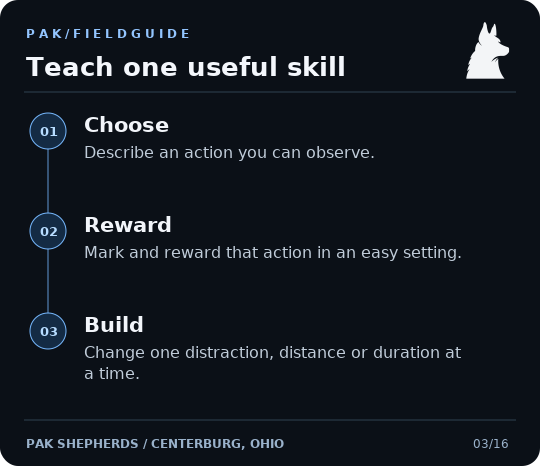
Read the graphic as text
- Choose: Describe an action you can observe.
- Reward: Mark and reward that action in an easy setting.
- Build: Change one distraction, distance or duration at a time.
Prepare before pickup
Choose a safe sleeping area, gates or barriers, suitable bowls, a leash, identification, and appropriate toys. Check doors, cables, household products, and objects a puppy could swallow. Decide which rooms the puppy will use initially rather than offering the whole house at once.
Ask for the current food and routine, veterinary records, and any written pickup instructions. Confirm who is taking time at home and who can cover daytime care. Keep contact details for your veterinary practice and its out-of-hours service somewhere easy to find.
Keep the first days manageable
A new home already brings many changes. Make room for quiet rest and avoid treating arrival day as a large gathering. Assign an adult to supervise when the puppy is awake and exploring. Agree on sleeping arrangements and outdoor routines before everyone is tired.
- Morning: outdoor break, meal according to the puppy’s current plan, and supervised time.
- Daytime: reliable care, appropriate breaks, short learning opportunities, and rest.
- Evening: another predictable stretch of care, quiet interaction, and preparation for the night.
This is a planning framework, not a fixed medical or feeding schedule. Adjust it with your breeder and veterinarian for your puppy.
Socialization means thoughtful experiences
AVSAB emphasizes early socialization while managing disease risk. Discuss appropriate settings and puppy classes with your veterinarian. Aim for manageable experiences rather than forcing greetings or overwhelming the puppy. An unfamiliar sound, surface, person, or environment is an opportunity to observe how the puppy responds and adjust.
Keep reading our socialization guide and training foundations.
Bring useful questions to the first veterinary visit
Bring the records you received and write down questions about vaccines, parasite prevention, food, growth, and safe activities. Your veterinarian can make recommendations for your puppy and local risks. Read our health and records guide for a practical checklist.
At PAK, we want to understand the home a puppy is joining. Share your routine and uncertainties in the puppy application; you do not need to pretend you have every answer.
Sources and further reading
These independent resources support the general guidance above. Their inclusion does not imply an endorsement of PAK Shepherds.
Published November 25, 2026. Written for the PAK Shepherds Knowledge Hub. General education, not individual veterinary or behavior advice.